Debbie Shively is originally from California and holds a Bachelors Degree from the University of Redlands. She began her career in international education at Menlo College where she was the Assistant Director of Admissions, predominantly working with international students. Debbie relocated to Australia in 2003, where she completed her Masters Degree in International Studies at the University of Sydney. While a graduate student, Debbie held an internship at the US Consulate General in Sydney in the Education Advising Centre and worked for IDP Education Australia. Following the completion of her Master's and prior to joining CAPA, Debbie held positions within the post graduate and undergraduate sectors at the Australian Graduate School of Management (AGSM) and JMC Academy in Sydney.
Study Abroad with CAPA International Education
Discover Your World
Sydney
The Sydney Experience
Experience the world "down under" with the CAPA Sydney Program, which offers the opportunity of a lifetime to travel abroad while immersing yourself academically and socially in the local culture.
The Sydney classroom is like no other, and CAPA brings you the best it has to offer. Through the My Education (ME) program, we actively encourages students to explore beyond the classroom in order to meet and interact with Sydneysiders. Students can participate in meetings, discussion groups and cultural evenings with representatives of the many ethnic and religious minorities who give Sydney its rich cosmopolitan flavor. A city of international business, fine arts, design, theater, technology, politics and finance, Sydney is an exciting, modern hub that inspires creativity and cutting-edge innovation. All of this awaits you during your time abroad!
Regardless of your major, our academic courses keep you on track while you soak up the regional history and culture. Study abroad options include courses with local visits and special lectures, all designed to engage you in critical thinking and challenge you to comprehensively pursue subjects through academic and field research.
One of the largest internship providers in Sydney, we have built an extensive network of internship sites in businesses, nonprofit and nongovernmental organizations. Work with locals and enhance your resume! Build professional skills and gain perspective as you engage a network of international contacts in your field.
Common Questions about the Sydney Experience
- How will I get to class?
- Like many Australians, you will walk, ride the train, or take a local bus. The International Program Services Team will give you more specific information about the closest public transportation route to your classes at the in-country orientation. The CAPA Sydney Program includes the “My Multi 1” pass, a transportation ticket for the trains, buses, and ferries that we will distribute at orientation. A “My Multi 1” pass will get you almost everywhere you need to go, but you may need a “My Multi 2” pass for an internship, or to get to the more remote beaches.
- Where will I live?
- CAPA students reside either through a homestay with an Australian family or in a student residence. Homestays are located in the city, but usually not downtown because families generally prefer to live in more residential areas on the outskirts. Your homestay will usually include continental breakfast (usually help yourself) and dinner (made by the family), and there may be other students there with you. This is a great way to learn more about the city’s culture and become integrated into regular Sydney life. However, host families are not tour guides and have busy lives to lead, so while they can offer advice on things to do, students still need to be independent. Speak to your study abroad advisor at your institution or your CAPA Program Manager for specific details of your program’s inclusions.
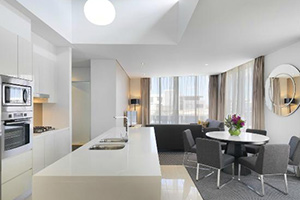
The CAPA student residences throughout Sydney will vary in terms of style, location, and amenities, but they all meet the following standard requirements: located no more than a 40-minute commute via public transportation from the CAPA Sydney Center; single beds / bunk beds; a place to store clothes (shelves or a closet); access to a kitchen equipped with basic cookware and utensils (this may be within the individual unit or within the building, and shared with other students); a bathroom with shower (this may be within the individual unit or within the building, and shared with other students).
Although all residences will meet CAPA’s criteria, please note that it is virtually impossible to find residences exactly alike. For example, some residences may have units with multiple students and their own kitchen and bathroom; others may have shared kitchens and bathrooms, but students are housed in their own single rooms. We will provide specific, detailed information about your residence 14 days prior to the program’s start. - Who will I live with?
- If you decide to live in a student residence, you will share your space with two to eight students, depending on the size of the accommodation. Generally there will be two – three students per bedroom. If you choose the homestay option, you will have your own bedroom, but there may be other students staying in a separate room.
- Do student accommodations have telephones?
- While some student residences do have landlines, it is not standard. Internet cafes often provide good international calling rates, and students have also begun using Internet resources like Skype to place international calls for a small fee or no charge at all. If you live with a host family, it may not be appropriate to use their telephone: many local calls are not free. Please review the household telephone rules with your host family upon arrival. We will provide information about cell phone rental in your pre-departure pack or you may choose to rent or buy one once you arrive. Incoming calls on most mobile phones are free in Australia, but be aware of roaming charges and rates on outgoing international calls—these costs can build up quickly!
- How will I do my laundry?
- Shared laundry facilities are located in the student residence. If a homestay includes laundry services, you may find that the home only has a washer and your clothing will be line-dried outside. Your laundry will be done, at most, once or twice per week. When packing, plan appropriately for the extra time. If your host family does not include laundry facilities, they will help you find the closest Laundromat.
- Where can I receive mail?
- We suggest that you have mail and packages sent directly to the CAPA center in Sydney, with your name and the school that you attend clearly marked on the outside of the package or letter. You can find this address in your pre-departure packet that you will receive before departing for Sydney. By having your letters and packages sent to the center rather than your accommodation, we can keep them secure until you are able to collect them. Please be advised that when receiving packages from overseas, the sender must elect to assume all associated charges in shipping, including any customs fees. Failure to do so could delay or prevent you from receiving a package or even result in you getting a large customs bill!
- Can I have overnight guests?
- No guests are allowed in CAPA housing. The staff will happily provide a list of inexpensive options for friends or family. If you live in a homestay, note that most host families prefer that you not have guests at any time. Please be considerate of your family and arrange to visit with friends in other locations. For visits by friends and family, you can utilize the services of STA travel, which can help find affordable lodging close to the CAPA center or your own housing. For more information call STA at (800) 224-0371 or visit www.statravel.com.
- Is the electricity the same as in North America?
- No, the voltage in Australia is 240 (US voltage is 120). You should bring plug adapters and voltage converters with you because it’s more expensive to purchase them in Australia.
- What is the weather like?
- Sydney’s weather is fantastic, perfect for the beach almost any time. Summer temperatures average about 77 degrees Fahrenheit, but the temperature can climb quite a bit higher. Watch out for the humidity…85 degrees can easily feel like 105 in muggier air. Winter is cooler and not usually beach weather; extreme cold is unusual. Spring and fall tend to be quite temperate. Bear in mind that Australia is in the Southern Hemisphere meaning winter is from June through August, and summer is from November through March!
- What clothes should I bring?
- A good pair of walking shoes is essential. Remember that you will most likely walk more than you do at home. A warmer jacket is important outside of summer, but a lighter jacket can be useful on some summer evenings. And of course, Sydney is on the water, so don’t forget your swimsuit if you travel during warmer months. Remember that you may want to buy clothes in Australia, so don't over-pack!
- How much money should I bring?
- Spending habits vary greatly from student to student. For example students living in student residences need to budget appropriately for food and toiletries. To be cautious, we generally recommend that you bring at least $125 per week. The frequency with which you travel, eat in restaurants, and go out in the evenings will determine your expenditures. In the CAPA student handbook, you will find a “Do – It – Yourself” budget. Fill it in prior to departing (and bring it with you!). After the first week and a half, check your actual spending against the budget to help you determine how to budget accordingly for the program’s duration.
- What form of currency should I bring?
- Diversify, diversify, diversify. You’ll find that contemporary ATM cards (with a credit option) will cover almost everything. But remember: should your wallet get lost or stolen, you have few options until you replace the card, so we recommend bringing a modest amount in traveler’s checks (approximately $150). Set this aside for emergencies when you arrive. You’ll need a photo ID to cash traveler’s checks at most locations, but they are not accepted everywhere. If you bring your ATM card overseas, talk to a bank representative to ensure your card has international capabilities and to learn any other idiosyncrasies. If your PIN is longer than 4 digits, ask your bank representative whether this will work overseas. Almost all ATMs will add a fee for international transactions. And consider using a credit card with a low credit line before going abroad; to better track your spending, we recommend using it in case of an emergency ONLY. Because many airports do not offer the best exchange rate, you could acquire Australian dollars (20 – 50 AUD) from your local bank before leaving; this might come in handy for a taxi to the CAPA center or your housing.
- Should I open a bank account?
- No — as a non-resident, you will not be able to open an account. Please note, however, that Australian banks will not require an account to process a wire transfer from home.
- What happens if I get sick?
- Sydney has excellent doctors and medical facilities. You are automatically covered by CAPA's World Student Insurance policy up to $10,000 per medical claim. Be sure to keep your brochure with you for information on the full coverage. Healthcare service is different overseas than in the United States: If you visit a doctor or hospital, you are required to pay up front. You will then be reimbursed up to $10,000 by the World Student Insurance policy, provided that you produce the receipts associated with your medical services and submit your claim within 30 days of returning to the US. For minor symptoms, it may be wiser to solicit healthcare advice from a local pharmacist first. This is common practice, and you’ll find it quicker and more efficient.
- Should I bring any medication?
- If you take prescription medication you should bring enough for your stay. Remember to keep any medication in its original packaging in your carry-on luggage. We recommend that you get a doctor’s note explaining the medication, as well as the drug’s generic name. Keep this information handy if you have any issues with your prescription or need to obtain more; it can be difficult to ship medications overseas. If you are currently in counseling, you may want to set up weekly phone calls with your counselor. CAPA can provide a list of local counselors and psychologists, or your own psychologist may have local connections.
- What will I eat?
- Sydney is an international city, and you’ll find foods and flavors from all over the globe, particularly Asian food, which is of a very high standard and low cost. If you live in an apartment or a residence, you will be responsible for your own meals. In addition to the many supermarkets, there is a plethora of fresh food available, particularly seafood. Venture beyond the norm to visit your local butcher, green grocer, or fish market. Australians enjoy a large breakfast, so you will find many familiar favorites like bacon, eggs, and cereal, although they might be cooked quite differently. Lunch is a little later than in the U.S. (around 1:00p.m.). Dinner is very much a family affair (6:00 – 8:00 p.m.), and is usually the largest meal of the day. With Sydney’s many diverse cultures and backgrounds, you can find a wide range of foods at many different hours. Please be forthcoming about any dietary restrictions on your CAPA application, especially if you will live with a host family. We always do our best to accommodate these needs, but you may need to purchase some grocery items yourself if they are not used by the host family.
- When can I travel and what are the holidays for my program?
- Speak with your program coordinator for specific holiday dates such as semester breaks or long weekends. Because these vacation dates are subject to change, we suggest that you not make any lengthy travel arrangements until you arrive. You can also use weekends to travel. Although Australian train and bus systems are extensive, you may have to travel large distances that can be quite time consuming. Discount flight carriers have also grown in popularity and are a convenient way to cover Australia’s vast regions. It is important to bear in mind that these flights aren’t always reliable and have rigid luggage weight limitations.
- How will I get to know the locals?
- While our center is housed at the Australian Catholic University, you will not take classes with local students. However, there will be opportunities to meet local students studying on campus. Additionally, CAPA’s My Education program will provide you the opportunities to immerse yourself in local culture. Also, the CAPA International Programs Team can recommend many individual opportunities with which you can become involved, such as volunteering. Ultimately, the study abroad experience is as rich as you make it: the more you put in, the more you will take away.
- Do I need a visa to study in Australia?
- All US citizens need a visa to enter Australia. The type of visa depends on whether you will be in Sydney for more than 90 days. Please click here to read more about student visas.
- How can I find out more on how to prepare?
- The US government has created a very useful website for students studying abroad, with information on obtaining travel documents, staying healthy, and knowing what to do in an emergency, including safety tips, how to find the nearest embassy, how to vote while overseas, and more: http://studentsabroad.state.gov.
Sydney Program Center
The CAPA Sydney Center is located in the North Sydney area of the Lower North Shore. The historic Rocks district is located just a short ferry ride across Sydney’s famous harbor.
The CAPA center is a lively place with a strong sense of community. CAPA's administrative and advising center is just a two minute wak from the campus of the Australian Catholic University (ACU). Classes and orientation activities take place on the campus, which has fully equipped classrooms, computer labs, a library, bookstore and dining facility. The CAPA center is well served by public transportation with easy access to all parts of the city.
The CAPA Center organizes a range of events throughout the year, and regular activities encourage interaction between students from the many institutions represented on the program and from ACU. These include:
- outings to museums, theaters, film festivals, and lectures
- special events such as holiday dinners and picnics
- community service projects
- walking tours of Sydney, including the city's different coastal areas
Students live within commuting distance of the center, either in shared apartments or homestays.
Common Questions About the Sydney Center
- Where is the CAPA Sydney Center?
- The CAPA Sydney Center is located adjacent to the campus of the Australian Catholic University (ACU), minutes from Sydney Harbor, the Opera House and Harbor Bridge in the prestigious Lower North Shore area. North Sydney is a secondary business area just north of the main business district downtown, and can fully meet the needs of students and faculty alike. It is easily accessible by bus and train from all parts of the city, and has a myriad of eateries, cafes and restaurants to cater to all tastes. Students will have access to the complete set of resources at ACU, along with interaction with their student body.
- Who is the local staff?
- CAPA’s International Program Services Team staffs the CAPA center in Sydney. They are true experts in their field, and you’ll find them to be a great resource on many Australian subjects from the best place to buy Aboriginal art, to directions to the closest train station.
- Are there Internet facilities? Should I bring my laptop?
- There are computer facilities located on the ACU campus. There are many Internet cafes throughout the city. Either of these options should suffice to keep you in touch with friends and family at home. Wireless Internet access is available within the student residences, but you will need to pay a monthly fee to receive access. Please be advised that the computers at ACU as well as at many Internet cafes are set up for basic web surfing and may be a bit slower than what you’re used to. Downloading television programs, for example, may not be possible.
- Bringing your laptop is a personal decision. CAPA does not require the use of a laptop for anything. Be advised that if you do bring a laptop, you may want to purchase additional insurance. In the event that it breaks, is stolen or lost it will only be covered up to a maximum of $250 through the CAPA included insurance.
Resident Director, The Sydney Center
Debbie Shively
Click on a course name below for a brief description and example syllabus.
-
Art Down Under - from the Dreamtime to the Present (SDNY 3002)
This course provides an insight into many of the major movements and accomplishments that have occurred in Australian art. Each topic will look at specific works of art and the historical and sociological context in which they were produced. The influence of international art movements on Australian art and artists will be examined. The major ideas and debates regarding Aboriginal art will be introduced, focusing on the themes of tradition, identity and place. The course also explores the influence and contribution to Australian art history of feminism and multiculturalism. By exploring different approaches to Australian art students will gain a greater understanding of Australian society and culture and how it reveals itself through art.
Download sample syllabus -
Australian Cinema: Representation and Identity (SDNY 3003)
The main objective of this course is to enable students to engage with important issues of personal and collective, or national identity via the study of notable films – in this case from Australia. The question of what it means to be Australian will be broached in terms of the more general concept of ‘national identity and the imagined community’, as reflected through a wide range of Australian films. Indeed, a question to be explored is the extent to which Australian films have reflected or determined Australian values.
Download sample syllabus -
International Business and Trade - Australia and the Pacific Rim (SDNY 3004)
The objectives of this course are to introduce the student to the theoretical analysis of international trade, trade policy and some practical implications for international business and globalisation in Australia and Pacific Rim neighbours. After these analyses, students should be able to assess more objectively major international trade issues, particularly as they may affect Australia and the U.S.
Download sample syllabus -
Learning through Internships: Sydney (SDNY 3006)
The Learning through Internships Program is an educational experience that gives students the opportunity to apply classroom learning to the workplace and social environment of the host culture, to expand professional skills and earn academic credit. The Focus Seminars and Regional Identities lectures and activities which make up an important part of the program are designed to provide theory and practice around societal themes which inform and enrich the internship experience.
Download sample syllabus -
The Aboriginal Experience - An Anthropological View (SDNY 3007)
This course is designed to encourage students to engage in a critical analysis of anthropological methods and trends which are suited to exploring the particulars of peoples, movements and situations in relation to contemporary issues of change and the way in which Aboriginal history and society have been viewed in Australia. It explores the interplay between culture and identity and analyses the various historic and academic constructions of Aboriginality. It engages with anthropological and public debates around the notions of colonisation, identity formation, gendered identities, protection policies, the law and media.
Download sample syllabus -
Understanding Australia from a Sociological Perspective (SDNY 3008)
This course is designed to encourage students to engage in a critical analysis of sociological methods and analysis suited to exploring the particulars of peoples, movements and situations in relation to contemporary issues of change in Australia. It explores the comparative perspectives between culture and society and also analyses the various constructions of Australian identity. It engages with sociological and public debates around the notions of ethnicity, gender, migration, identity, and the media in Australia.
Download sample syllabus -
Australian Government and Politics in the Pacific Rim Context (SDNY 3011)
This course examines the government and politics of Australia and Australian engagement in Asia. It will do so by surveying similarities with and differences from the North American democratic model and by examining Australia’s substantial and abiding interests in the Asian region. By the end of the course, students will be aware of the magnitude of the influence that the Asia Pacific region has had on Australian foreign policy. Comparisons with the United States of America will be encouraged.
Download sample syllabus -
Intercultural / Cross Cultural Communication: Theories, Practice and Factors Influencing Intercultural Communication (SDNY 3012)
This course will increase the understanding of basic concepts and principles regarding communication between people from different racial, ethnic, and cultural backgrounds within Australia, including Aboriginal, and immigrant populations. The course will introduce you to theory and research in the area of intercultural communication, and will help you develop this knowledge in understanding and improving human interaction in both the study abroad environment and international contexts. It will develop effective intercultural communication skills for learning abroad in Australia, and focus on a study of the social, structural and historical dimensions of relations between and among racial, ethnic and gender groups in contemporary Australian society. This course is designed to increase student’s awareness and appreciation for the complexity of intercultural communication skills in everyday situations. It offers a critical perspective on current theory and research in intercultural communication. The primary objective of the course is to develop cultural relativist attitude.
Download sample syllabus
Click on a course name below for a brief description and example syllabus.
-
Art Down Under - from the Dreamtime to the Present (SDNY 3002)
This course provides an insight into many of the major movements and accomplishments that have occurred in Australian art. Each topic will look at specific works of art and the historical and sociological context in which they were produced. The influence of international art movements on Australian art and artists will be examined. The major ideas and debates regarding Aboriginal art will be introduced, focusing on the themes of tradition, identity and place. The course also explores the influence and contribution to Australian art history of feminism and multiculturalism. By exploring different approaches to Australian art students will gain a greater understanding of Australian society and culture and how it reveals itself through art.
Download sample syllabus -
Australian Cinema: Representation and Identity (SDNY 3003)
The main objective of this course is to enable students to engage with important issues of personal and collective, or national identity via the study of notable films – in this case from Australia. The question of what it means to be Australian will be broached in terms of the more general concept of ‘national identity and the imagined community’, as reflected through a wide range of Australian films. Indeed, a question to be explored is the extent to which Australian films have reflected or determined Australian values.
Download sample syllabus -
International Business and Trade - Australia and the Pacific Rim (SDNY 3004)
The objectives of this course are to introduce the student to the theoretical analysis of international trade, trade policy and some practical implications for international business and globalisation in Australia and Pacific Rim neighbours. After these analyses, students should be able to assess more objectively major international trade issues, particularly as they may affect Australia and the U.S.
Download sample syllabus -
Learning through Internships: Sydney (SDNY 3006)
The Learning through Internships Program is an educational experience that gives students the opportunity to apply classroom learning to the workplace and social environment of the host culture, to expand professional skills and earn academic credit. The Focus Seminars and Regional Identities lectures and activities which make up an important part of the program are designed to provide theory and practice around societal themes which inform and enrich the internship experience.
Download sample syllabus -
The Aboriginal Experience - An Anthropological View (SDNY 3007)
This course is designed to encourage students to engage in a critical analysis of anthropological methods and trends which are suited to exploring the particulars of peoples, movements and situations in relation to contemporary issues of change and the way in which Aboriginal history and society have been viewed in Australia. It explores the interplay between culture and identity and analyses the various historic and academic constructions of Aboriginality. It engages with anthropological and public debates around the notions of colonisation, identity formation, gendered identities, protection policies, the law and media.
Download sample syllabus -
Understanding Australia from a Sociological Perspective (SDNY 3008)
This course is designed to encourage students to engage in a critical analysis of sociological methods and analysis suited to exploring the particulars of peoples, movements and situations in relation to contemporary issues of change in Australia. It explores the comparative perspectives between culture and society and also analyses the various constructions of Australian identity. It engages with sociological and public debates around the notions of ethnicity, gender, migration, identity, and the media in Australia.
Download sample syllabus -
Australian Government and Politics in the Pacific Rim Context (SDNY 3011)
This course examines the government and politics of Australia and Australian engagement in Asia. It will do so by surveying similarities with and differences from the North American democratic model and by examining Australia’s substantial and abiding interests in the Asian region. By the end of the course, students will be aware of the magnitude of the influence that the Asia Pacific region has had on Australian foreign policy. Comparisons with the United States of America will be encouraged.
Download sample syllabus -
Intercultural / Cross Cultural Communication: Theories, Practice and Factors Influencing Intercultural Communication (SDNY 3012)
This course will increase the understanding of basic concepts and principles regarding communication between people from different racial, ethnic, and cultural backgrounds within Australia, including Aboriginal, and immigrant populations. The course will introduce you to theory and research in the area of intercultural communication, and will help you develop this knowledge in understanding and improving human interaction in both the study abroad environment and international contexts. It will develop effective intercultural communication skills for learning abroad in Australia, and focus on a study of the social, structural and historical dimensions of relations between and among racial, ethnic and gender groups in contemporary Australian society. This course is designed to increase student’s awareness and appreciation for the complexity of intercultural communication skills in everyday situations. It offers a critical perspective on current theory and research in intercultural communication. The primary objective of the course is to develop cultural relativist attitude.
Download sample syllabus
Click on a course name below for a brief description and example syllabus.
-
Learning through Internships: Sydney (SDNY 3006)
The Learning through Internships Program is an educational experience that gives students the opportunity to apply classroom learning to the workplace and social environment of the host culture, to expand professional skills and earn academic credit. The Focus Seminars and Regional Identities lectures and activities which make up an important part of the program are designed to provide theory and practice around societal themes which inform and enrich the internship experience.
Download sample syllabus -
Australian Government and Politics in the Pacific Rim Context (SDNY 3011)
This course examines the government and politics of Australia and Australian engagement in Asia. It will do so by surveying similarities with and differences from the North American democratic model and by examining Australia’s substantial and abiding interests in the Asian region. By the end of the course, students will be aware of the magnitude of the influence that the Asia Pacific region has had on Australian foreign policy. Comparisons with the United States of America will be encouraged.
Download sample syllabus
Live. Explore. Create. Discover. LEARN in Sydney
Sydney is your Classroom!
No matter your major, CAPA has the courses and internships to keep you on track while studying in Sydney.
- Art History
- History
- Marketing
- Political Science
- Communications
- Theater
- Economics
- Literature
- Social Science
- Journalism
- Business
- Sociology
- Anthropology
- English
- International Relations
- Psychology
- Education
Academic and Internship Credits
All CAPA students receive full credit for courses and internships completed. Credits are issued through the University of Minnesota CAPA School of Record Agreement.
Common Questions about the Sydney Academics
- What are the admission requirements for the CAPA Sydney Program?
-
- You must be at least 18 years of age and it is recommended that participants are the equivalent of a 2nd semester sophomore.
- You must have a minimum GPA of 2.8 (on a 4.0 scale)
- You must be in good standing with your home institution and will be required to present two recommendations with your application.
- When do I need to turn in my CAPA Sydney Program application?
- Please refer to the Dates and Pricing tab for Sydney. These deadlines are set at 85 days prior to the start of the program.
- How will I know if I have been accepted on the CAPA Sydney Program?
- If your application is approved you will receive a welcome pack approximately 70 days prior to your departure from the United States. If you have any questions regarding your application please call the CAPA student services line at 1-800-793-0334. If the CAPA admissions team has any concerns regarding your application you will be contacted immediately upon receipt of your application.
- What courses are offered for the CAPA Sydney Program?
- The courses offered for the CAPA Sydney Program can be found at the top of this page. Please note that only one course is offered during the Summer session. Most students do a full-time internship for 6 credits in the summer. You must do a 3-credit internship and the 3-credit course in the summer.
- How many credits are earned per course?
- Each course is worth 3 credits, with the internship and its corresponding course worth 6 credits total. During the Fall and Spring semester you may choose to take 12 – 18 credits. During the Summer session you must enroll for at least 6 credits.
- Can I take any courses I choose?
- Before signing up for a specific course you will need to check with your home institution to make sure they will approve the transfer credit provided for a specific course. If you are having difficulties getting a specific course approved please call the CAPA student services line at 1-800-793-0334 and they will contact your university on your behalf. On your application you will be ask to list several course choices. On rare occasions there may be schedule or enrollment conflicts. If this occurs you will be notified and ask to choose a second or third choice.
- Where will my classes be held?
- Your classes will be held at the CAPA Sydney Center. Please note you will not be enrolled with students from Australian Universities and instead will be attending classes with students from various US universities and colleges.
- Do I have to participate in an internship?
- During a semester program it is up to you on whether or not you want to participate in an internship in Sydney. You can also choose to take a full load of faculty-led contextual courses. However, there is only one contextual course offered in the summer, so a full or part-time internship is required to receive 6 credits.
- How many credits will I earn by participating in an internship?
- During the spring and fall semesters you will be allowed to participate in a full or a part-time internship, up to 20 hours per week or 6 academic credits during the semester. During these semesters you may also do an internship for 3 credits. During the summer session you must choose either a full or part time internship. In addition to your time at your internship site, whether it be spring, summer or fall, you will also participate in an internships course. Each class will be made up of five course components focused on your internship and the overseas experience. These will be examined through seminars, workshops, presentations, and discussions.
- If I choose to participate in an Internship as part of my program when will I receive my placement information?
- As long as you have completed your internship application in full by the 85 days prior to departure deadline you should expect to receive your internship placement description fourteen days prior to your departure from the US. There can always be unforeseen delays with specific, specialized fields, so on rare occasions a placement may be delayed due to unforeseen circumstances. In these cases CAPA will be in touch directly providing detailed updates with regards to each specific situation.
Please refer to the following link for more information regarding CAPA internships. - What are the steps I need to take to ensure that I will receive credit for the program through my home institution?
- There are three important steps to successfully obtaining Transfer Credit through your home institution:
- Obtain written pre-approval of your courses as well as for alternate courses. CAPA can provide you with the needed course descriptions and syllabi to help with the approval process prior to applying for the program.
- Achieve good grades in your classes while studying abroad
- Complete a University of Minnesota Learning Abroad application as well as a transcript request form that CAPA will provide in your welcome pack once your application is received.
- When can I expect to have my transcripts sent to my home institution?
- Your University of Minnesota transcript will be sent to your home institution approximately four weeks after your return to the United States.
Chief Academic Officer
Dr. Sarah McKenzie
Dr McKenzie is the Chief Academic Officer of CAPA International Education. She manages the faculty world-wide, and oversees the academic policies and educational planning. She completed her B.A. in English and American Literature in the University of Kent in Canterbury, before going to the University of Warwick where she achieved her M.A. (specialising in Feminist Literary Theory, Victorian Literature, Critical Theory and Seventeenth-Century poetry) and her Ph.D on ‘Death and Inheritance in Seventeenth-Century Literature’ in 2003.
Sarah has over thirteen years teaching experience, eight of which have been teaching and working in the field of Study Abroad, at CAPA International Education, at Harlaxton College where she was the Chair of British Studies, and at the University of Evansville in the US where she was an Assistant Professor of English Literature.
Sarah’s areas of research and teaching interest include Shakespeare, British History and Identity, Early Modern Literature, Women's Literature, and 19th to 21st Century British novels and poetry.
Dates and prices are per session.
Fall 2010
-
Arrive in destination
Wednesday, August 25, 2010 -
Depart from destination
Sunday, November 28, 2010 -
Fee (including tuition)
$13,299 -
Application deadline
Friday, July 9, 2010
*Plus $150 housing deposit for students living in apartment housing
Spring 2011
-
Arrive in destination
Wednesday, January 19, 2011 -
Depart from destination
Sunday, April 24, 2011 -
Fee (including tuition)
$13,299 -
Application deadline
Wednesday, October 27, 2010
*Plus $150 housing deposit for students living in apartment housing
Summer 2011
-
Arrive in destination
Wednesday, May 25, 2011 -
Depart from destination
Sunday, July 10, 2011 -
Fee (including tuition)
$7,099 -
Application deadline
Wednesday, March 2, 2011
*Plus $150 housing deposit for students living in apartment housing
CAPA delivers academic excellence along with a complete cultural experience at an affordable price.
Tuition
Semester programs earn 12 to 18 credits (maximum of 6 credits for an internship); Summer session earns 3 to 6 academic or internship credits.
Housing and Meals
Students live within commuting distance of the CAPA Sydney Center in homestays or shared apartments. Homestays include breakfast and dinner with the family. Students in residential housing will receive a weekly meal stipend of $46 Australian dollars (AUD).
CAPA Services and Support
The CAPA Sydney team is available throughout your program to assist and support you. Students can also contact the 24 hour emergency cell phone for any urgent situations outside of office hours.
My Education Sydney
My Education is CAPA’s unique learning immersion program, which blends local culture and top-notch academics into the experience of a lifetime for our students. A proven education program that combines theme based learning with unique cultural experiences turning Sydney into your classroom.
Other Inclusions
-
Excursions
Full day excursion to Sydney Olympic Park, Featherdale Animal Park, and the Blue Mountains.
-
Insurance
Medical, travel and accident insurance.
-
Local transportation
Sydney "My Multi 1" Pass, which is good for buses, trains and ferries in the metropolitan area.
-
Internship Placement
Optional 3 to 6 credit-hour internships are available for all students in any major field of study at no additional cost.
Common Questions about the Sydney Dates & Pricing
- What else do I need to budget for besides my program fees?
- CAPA tries to provide an all inclusive program fee that will help cover most of your overseas costs; however there are a few items you will need to budget for in advance.
- Airfare
- Please call STA Travel at 1-800-224-0371 for a quote on the airfare cost to Sydney for specific program dates.
- CAPA sponsored trips
- Every semester CAPA Sydney organizes excursions that you can sign up for once you are in country. These trips range from $10 to $340 depending on the destination, inclusions, and length of the excursion.
- My Education Cultural Activities
- Throughout the semester CAPA has organized an array of cultural activities to help enhance your overall experience of living in a new culture. You will receive a detailed ME calendar at the beginning of the program. Most of these activities will be free however some have nominal costs listed on the calendar by each activity.
- Spending money
- It is a good idea to write out a weekly budget including everything you may need to spend – this should include your weekly food shopping, nights out, weekend and break travel, things you plan to buy in Sydney etc. Then you need to constantly monitor your spending against your budget to ensure you stick to it! Make sure you keep in mind the current exchange rate of the U.S. dollar vs the Australian dollar – visit this website for up to date information: www.xe.com.
- When are the CAPA program fees due?
- You will need to send in a $300.00 deposit along with your initial CAPA application. This deposit consists of a $50.00 non-refundable administrative fee plus $250.00 towards your program fees. Your final payment will be due 70 days prior to the start of the CAPA Sydney Program. If you have any questions regarding the payment schedule please contact the CAPA student services line at 1-800-793-0334.
- Can I use my financial aid to help cover the program fees for the CAPA Sydney program?
- For Fall and Spring semester programs your federal financial aid can be used to help cover the costs of the CAPA Sydney Program, however you will need to meet with your financial aid officer at your home institution as soon as possible to make sure you have taken all of the required steps to obtain your aid. Some Aid may be available for summer programs however again it is important to check with your home institution financial aid advisor to see if you qualify. Financial Aid students participating in the CAPA Sydney Program will follow a different payment schedule than non-financial aid students. Please refer to the following link for more specific Q & A’s on financial aid.
- What are the cancellation fees if I have to withdraw from the program?
- The CAPA cancellation fees are based on the number of days prior to the start of the program that we receive the cancellation notice.
- More than 60 days prior to departure: $250.00 Cancellation Fee
- 46-60 days prior to departure: 25% of the program fees plus $250.00 Cancellation Fee
- 22-45 days prior to departure: 50% of program fees plus $250.00 Cancellation Fee
- 21 days or fewer prior to departure: 100% of the program fee
Live. Explore. Create. Discover. LEARN in Sydney
Sydney is your Student’s Classroom!
Reputation
Since 1972 CAPA has stood for excellence in academics and cultural immersion. Over 50,000 students have participated in CAPA programs spanning the globe. CAPA programs weave academics and experiential leaning together with internships, co-curricular activities, and unique educational methods to create a holistic study abroad experience for your student.
Safety
Your student’s safety while studying in Sydney is CAPA’s top priority. From the moment your student gets off the plane in Sydney, the CAPA Sydney Team is there to assist them by offering guidance and support in a number of primary areas including cultural adjustment, medical needs, and life in the city. A 24-hour emergency number is given to students for any urgent situation that may arise outside of regular office hours.
My Education
My Education is CAPA’s unique learning immersion program, which blends local culture and top-notch academics into the experience of a lifetime for our students. A proven education program that combines theme based learning with unique cultural experience turning Sydney into your student’s classroom.
Courses/Internships/Credits
No matter your student’s major, CAPA has the courses and internships to keep them on track while studying in Sydney.
Price/Value/Inclusions
CAPA delivers academic excellence along with a complete cultural experiences at an affordable price. Combine that with the program unique inclusions like local transportation, excursions, insurance (medical, travel, and accident) and student union membership and no other program will compare.
Common Questions for Parents about Sydney
- How can I contact my son/daughter during the program?
- CAPA has provided all participants with the option of renting a cell phone for the duration of the program through our provider: PICCELL wireless. If they choose to order the cell phone, it will be shipped to them prior to leaving the country. Be sure to keep the cell phone number handy as this will be the best way to reach your student. Please click here for information on the PICCELL wireless option (PicCell is not available in Costa Rica). Students will have limited access to landlines while there are overseas. Please note that many of the international rates on calling cards are only applicable to landline calls. Calls made to cell phones are often much more expensive and use more minutes of an international calling card. You may want to consider temporarily setting an international calling plan from your landline in the United States. Many providers offer these plans, some examples of this are the AT&T International Plan and the MCI International Plan. When calling your student, don’t forget the time difference!
- I want to send my son/daughter a letter/package, where should I send it?
- Please address all letters and packages to the CAPA center where your student is studying and make sure to write C/O the student’s name and note their home institution. *Note: If you are sending a package via Fed Ex, you must select the option which indicates that all costs will be covered by the sender and you must provide your credit card number. Fed Ex adds on duty and administrative fees when the package arrives overseas and if you have not chosen to pay for these fees, the package will either not be accepted at CAPA or your student will be asked to pay these charges.
- I haven’t heard from my son/daughter in awhile, should I be concerned?
- Unfortunately for parents, many students get so caught up in the whirlwind of being abroad that they can be a little slow to keep in touch. Please keep in mind that this is normal and shouldn’t raise any immediate concern. Many families find that e-mail is the preferred method of communication as it enables the student time to respond when it fits into their busy schedule. Also, keep in mind that when your son or daughter contacts you to talk about a problem, they can often forget to follow-up. If your son or daughter expresses concern or unhappiness about a conflict or a dilemma, it may be a good idea to let a day or two pass and then contact him or her to make sure that all issues have passed. If the problem persists, be sure to keep in touch and monitor the mood of your son or daughter. If your child begins to behave erratically or completely uncharacteristically, this may be cause for concern and he or she should be encouraged to contact the CAPA staff in-country. Students are encouraged to discuss any problems they might be having with CAPA staff. While many parents want to know everything affecting their child or may wish to help them resolve their problems, allowing students to be an active participant in any resolution enables them to grow in terms of independence – one of the primary goals of study abroad.
- What kind of insurance coverage does my son/daughter have?
- CAPA provides all students with basic World Student Insurance. This provides a variety of coverage. We recommend that you make a copy of the World Student Insurance brochure to refer to while your son or daughter is out of the country. Please click here for the full insurance policy included in the program.
- Is any additional insurance available?
- For an added cost, you can purchase supplemental trip cancellation insurance. CAPA recommends this, as it can save you and your son or daughter thousands of dollars in the event that he or she needs to cancel from the program due to medical reasons. We have included a supplemental trip insurance brochure in this packet. Please click here for further information on the supplemental insurance.
- My son/daughter is sick, can he/she go to the doctor?
- CAPA World Student Insurance will reimburse a student for medical care, but it is important to note that your son or daughter will have to pay out of pocket up front for these costs. He or she should also be sure to hold onto ANY receipts in order to more easily reclaim the money spent once he or she has returned to the United States. Also, keep in mind that for mild illnesses, particularly in Australia, pharmacists are as equipped at diagnosing and prescribing medications as doctors in the United States. This method is quicker and less expensive and generally recommended for non-serious illnesses. Please click here for the full insurance policy included in the program.
- How do I send money to my son/daughter?
- Western Union is still a reliable resource for wiring money in the case of an emergency. You can visit http://www.westernunion.com or your local branch to do this. It can also be a good idea to get added to your son or daughter’s checking account through his or her bank before he or she leaves. That way, you can automatically transfer money into the checking account over the phone or online.
- What else might I need?
- There’s never really any way of predicting everything you could need while your son or daughter is abroad, but some precautionary measures can make everything easier:
- Keep a photocopy of your son or daughter’s passport on hand. If it gets lost, having a copy of this will expedite the process of getting a replacement.
- Keep a photocopy of any credit cards your son or daughter is bringing. Again, in the event of an emergency, this information can be useful.
Additional suggestions:
- Encourage your son or daughter to register at the local embassy in the country in which he or she is studying. CAPA has provided students with information on how to do this.
- Stay up to date on current events! Not all news is bad news, sometimes finding a fun story from the country that your child is studying in can help you to feel connected.
- Use online communication! E-mail can be great not just for staying in touch- now photos, movies, music, can all be sent electronically.
- Make sure you have an active passport! Should there be an emergency and you have to travel overseas, it is imperative that you have an active passport on hand! Make use of resources like www.lonelyplanet.com, and also borrow travel guides for the country your son or daughter is studying in from the local library. These guides include more than information on the cheapest hostels, and best restaurants- they also include useful financial information, such as the location of an American Express, the local police station, and the location of the closest hospital. CAPA staff will be able to provide your son or daughter with this information as well, but in case of an emergency, it can never hurt to have on hand!
Our enrollment system is easy to use, safe, and secure.
You can also download a printed application and mail it to us.


![]()